Candomble beleives and culture, originated from african voduns and musically based on drums, are widespread in Brazil, but also traveled south down to Uruguay, where exist also expressions of this religion.
Michel Desgrottes (1923-1993) worked with Guy Durosier in Hotel Rivera orchestra in the 50s. This 60s LP is based on french popular themes brought back by producer Jean Huc and played in a haitian latin style. But Michel Desgrottes' own composition "Ce Pas Fot Moin" is an irresistible jazzy mambo sung in Creole.
Les Docteurs du Rythme - Ce pas fot moin:
Follow with Caribbean sounds on Muzzicaltrips here.
A cuban classic from Puchito records label, sung by duo Celina y Reutilio, the track "A Santa Barabara" is more famous under the name "Que viva Chango".
Marimba traveled from Africa (balafon) to Central America and the Caribbean several centuries ago. This percussive and melodic instrument had time to spread and can be found along the Pacific shore from Mexico to Ecuador, where it became an integral part of local folklore (and even national pride in Guatemala).
Ignacio Jacinto Villa Fernandez (1911-1971), received his surname Bola de Nieve (Snowball) by cuban singer Rita Montaner. He's a really atypical singer and pianist in cuban musical scene, active from the 30s, then famous internationally, to the 60s he spent back in Cuba.
Panart Records was a pre-revolution cuban record label (before 1959), and released a good number of amazing records. Here's Alberto Beltran, a dominican singer, joined by Conjunto Casino.
Carnavals tour stops for sure in Cuba, through the release of this LP by french label Le Chant du Monde. Liner notes from the cuban writer Alejo Carpentier remind the historical background of original african and Spanish influences blending in Santiago, the second city founded in Cuba.
This early LP recorded by Pedro Laza for Fuentes label consists of 2 kind of styles widely played in Colombia: Fandango and Porro.
Fandango is originally an old spanish ternary rhythm, but being brought early to Colombia, it integrated local influences, african drums, brass bands (bandas papayeras), to become a successful style for record industry in the 50s.
This heavy record is the second Cimaco Sarmiento released for Fuentes. It includes cumbia, gaita, porro, plena and also palenque, as is tagged the "Bombo y Maracas" hit. Hanging around in Baranquilla bars can reveal great record collections, and even in some small places, attention is paid to play the music with original vinyls...
San Andres is a caribbean island with english west indies influence. This is noticeable musically, but this island having being part of nicaraguan and now colombian territory, it also integrates latin culture and spanish language.
Eliseo Herrera (1924) played with various formations including one of the greatest at Fuentes: Los Corraleros de Majagual. He imposed his specific way of singing which became a style called "Trabalengua" (tongue-twisting). You'll recognize directly listening to following tracks, but basically it consists of producing a dense jerky flow, very fast, adding syllables, without any pause for breathing.
Here's a Mexican band created in the late 50s and composed by the drummer Carlos Daniel Navarro Pulido (Lobo) and the singer Luis Angel Silva Nava (Melon). Their first LP (early 60s) is representative of the various caribbean influences in during the 60s (cuban orchestras, US latin jazz, african drums... ), as many musicians from the region were playing in Acapulco or Mexico.
A special post to discover various instruments and rhythms from the afroperuvian musical environment. Afro culture in Peru is direct consequence to slavery of various african ethnic groups brought until 1850. A kind of "identidad costena" (coastal identity) has been developed by the black people and afrodescendientes on the pacific coast, culturally totally different from interior's andean mountains (in some aspects, this regional specificity that can remind La Cuesta in Colombia).
This seems to be the 2nd LP from an ephemera band (68-72) from Caracas called Los Kenya(s). Band leader was the pianist Ramon E. (Ray) Perez, who previously played with Los Dementes, and then played in New York with various figures as Ray Barretto, Cheo Feliciano, Cortijo, Patato...
When the famous american composer Charles Fox plays "Just For Fun", it results a nice and sharp latin album from 1963, influenced both by classical and jazz elements.
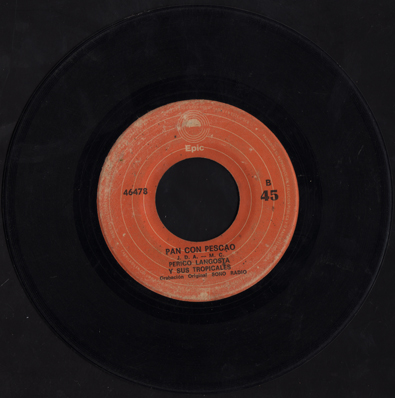
This 7" is made in Colombia but the music comes from peruvian label Sono Radio (Also on the B side are Los Diablos Rojos). Irresistible track with perfect jazzy feeling guitar . Enjoy!
Perico Langosta y sus Tropicales - Pan con Pescao: